The Definitive Guide to SIG SAUER Pistol Red Dot Sights
Welcome to the definitive guide to SIG SAUER Pistol Red Dot Sights. Whether you are outfitting your everyday carry setup, preparing for a match, or upgrading your duty weapon, transitioning to an optic is one of the most effective ways to enhance your accuracy and speed.
What is the best pistol red dot for me?
The best pistol red dot (also known as a reflex sight or a pistol optic) for you depends on your specific application. For concealed carry, prioritize a compact, micro red dot with reliable technology like MOTAC (Motion Activated Illumination System) (sometimes referred to as “shake awake”). For duty or tactical use, choose an enclosed emitter, military-grade sight for maximum durability. Competition shooters often prefer a larger window and an open emitter system for maximum visibility .
The Evolution of the Reflex Sight
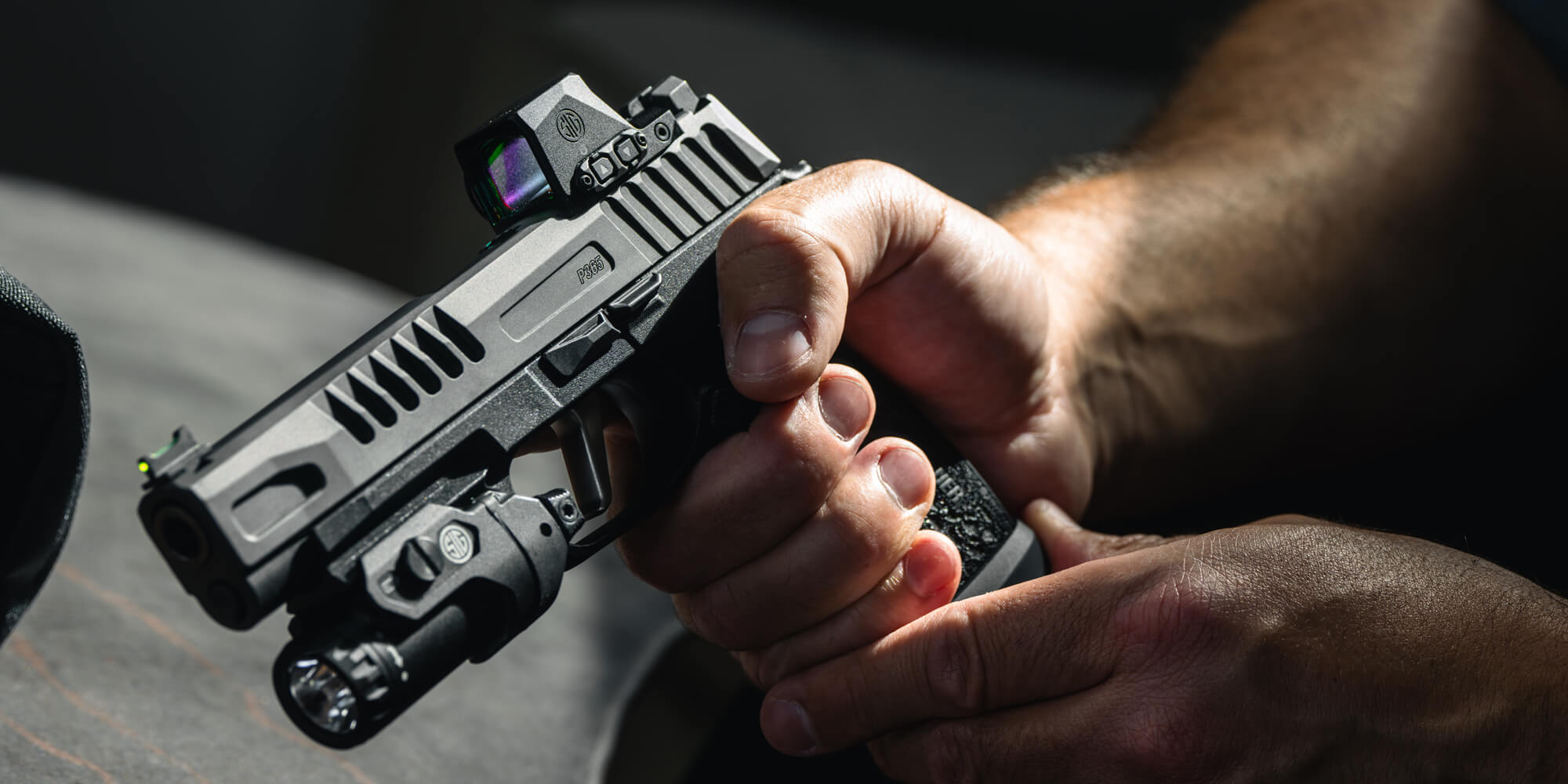
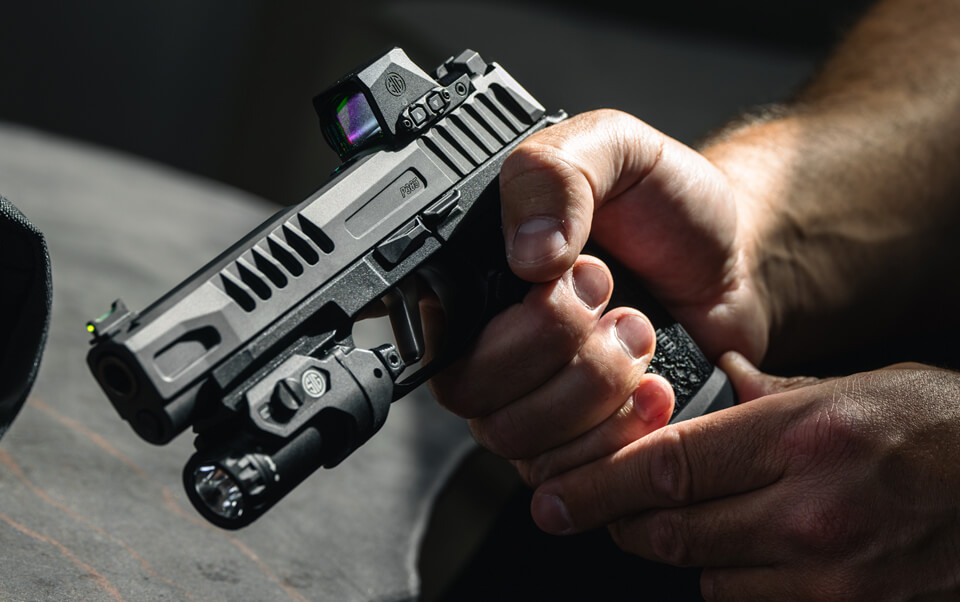
Before diving into specifications, it helps to understand exactly what these optics are and how they came to dominate the firearms industry. A reflex sight (short for reflector sight) is an optical device that uses a specialized glass lens to display an illuminated aiming point—typically a red dot—within your field of view. Unlike traditional iron sights, which require you to precisely align a rear notch, a front post, and the target, reflex sights allow you to stay entirely target-focused. You simply overlay the dot on your target and press the trigger.
A Brief History of Adoption
The journey of red dot sights from niche accessories to standard equipment spans several decades:
- Target Shooting & Competition: In the 1990s, competitive shooters in disciplines like USPSA began mounting large, tube-style red dots to their race guns. While bulky, these early optics proved that a single-plane focal point drastically reduced split times and improved accuracy.
- Military & Law Enforcement: As technology advanced, optics became smaller, more rugged, and more dependable. Elite military units and SWAT teams began adopting duty pistols with milled slides to accept these optics, recognizing their massive advantage in low-light environments and high-stress encounters.
- Concealed Carry & Civilian Use: Today, thanks to the miniaturization of electronics and the introduction of durable micro red dots, optics are no longer just for duty or competition. They are the new standard for civilian concealed carry, offering an unparalleled advantage for both new gun owners and experienced shooters alike.


What Makes the SIG SAUER Line of Pistol Optics Stand Out
The market for pistol optics is crowded, but SIG SAUER’s ROMEO line has consistently set the benchmark for innovation. SIG didn't just build sights for their own firearms; they engineered optics to be universally superior. It is important to note that SIG pistol optics don't just fit on SIG SAUER guns—they are designed to mount perfectly on most major manufacturers' pistols, including Glock, Smith & Wesson, Walther, and more through the proliferation of industry-standard optic footprints and adapter plates.
Here is what makes the SIG SAUER family of pistol reflex sights a top-tier choice:
- Uncompromising Durability: Whether you need a military-grade optic like the ROMEO-X SIG-LOC or a rugged polymer option for casual range days, SIG optics undergo brutal drop-testing and hundreds of thousands of rounds of actual live fire validation to ensure reliable performance.
- Cutting-Edge Technology: With proven reliable technologies such as MOTAC™ (Motion Activated Illumination), MAGNETAC™ (Magnetic Activation), DARC™ (Dark Adaptive Reticles and Coatings) and SIG-LOC™ (Leverage Optimized Connection), SIG SAUER is at the forefront of technology advancement to make pistol optics more reliable and user-friendly.
- Lens Quality and Optical Design: SIG SAUER uses high quality aspherical lenses in all of our pistol optics, rather than lower-cost mangin or doublet designs used by other manufacturers. Our optical systems are tuned for low parallax and low visual distortion, while allowing clear, crisp, bright reticles for the very best sight picture in the industry.
The Mechanics of Speed and Accuracy
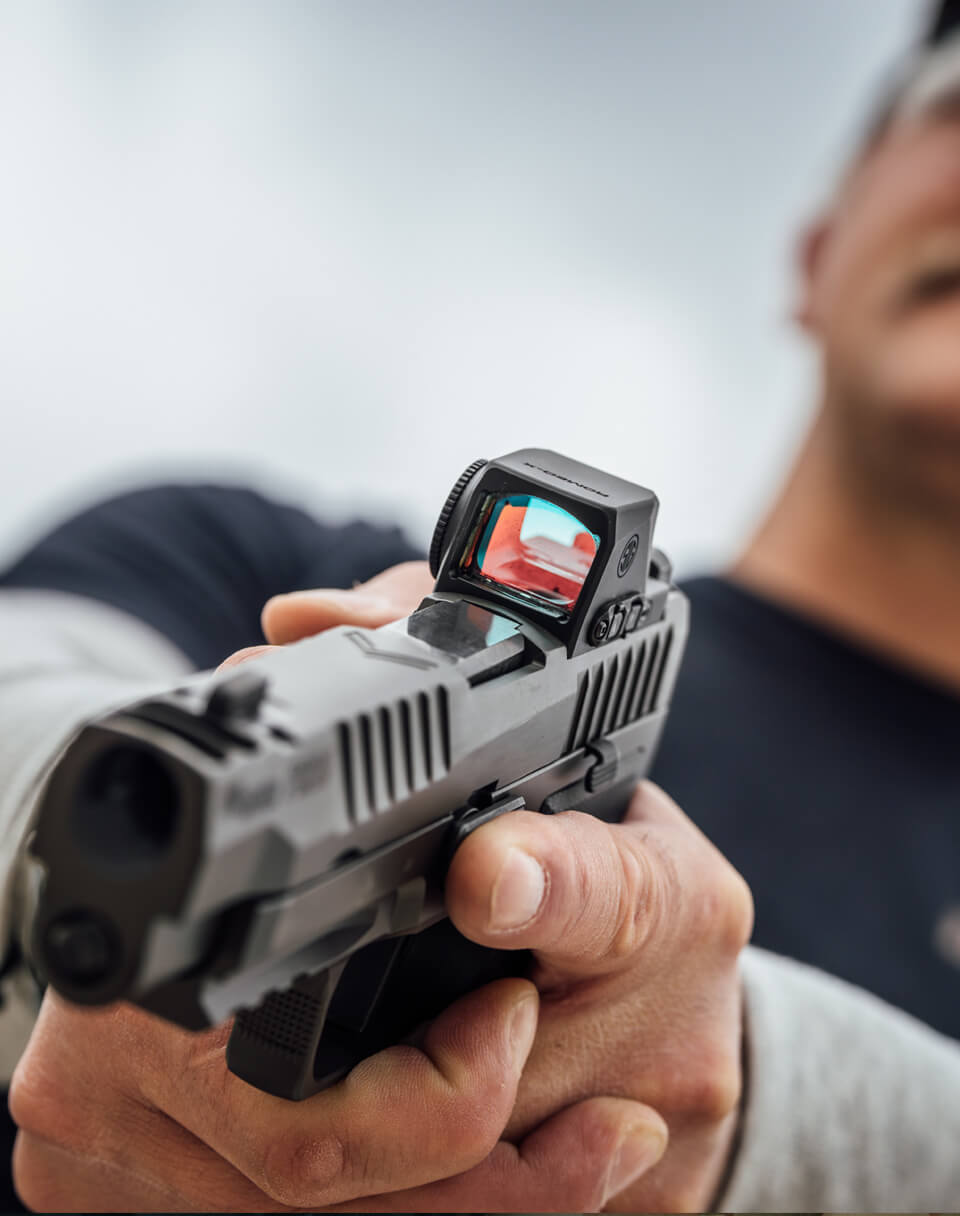
To understand why reflex sights are so effective, we have to look at the biomechanics of vision. When a shooter uses iron sights, the human eye is forced to rapidly shift focus back and forth between the target, the front sight, and the rear sight. Transitioning to a red dot sight eliminates this focal shifting. By projecting the dot at optical infinity, the shooter maintains a continuous, hard focus on the target. This single-plane alignment reduces target acquisition time by an average of 20-30% for proficient users compared to iron sights. Additionally, true reliability requires redundancy. The optimal setup pairs a highly dependable reflex sight with co-witness sights. Because most optics sit slightly above the slide, installing suppressor-height sights allows the iron sights to be visible through the lower portion of the optic window, providing a fail-safe in the rare event of battery depletion. For those looking to combine both shooting options, the ROMEO-X line of red dots features the industry's lowest deck height, allowing shooters to co-witness their standard height irons.

Finding Your Footprint
An important aspect of buying a red dot is understanding the "footprint"—the specific pattern of screw holes in the red dot.
Common Footprint Categories
- Shield RMSc: The standard for slim, subcompact pistols (e.g., P365, Glock 43X). SIG pistol optics with this footprint have COMPACT in the model name.
- DeltaPoint Pro (DPP): The standard for full-size and compact duty pistols (e.g., P320, M17). SIG pistol optics with this footprint have PRO in the model name.
- RMR: A widely used footprint across various aftermarket slides and adapter plates.
To ensure you purchase the correct optic for your slide, always reference the official SIG SAUER Optic Cut Guide.
What is SIG-LOC™ and Why Are Shooters Making the Switch?
As red dot technology continues to advance, the methods used to mount these optics to pistol slides have also evolved. One of the most significant recent breakthroughs in this space is SIG-LOC (Leverage Optimized Connection). First developed during the creation of the military-grade ROMEO-M17, SIG-LOC is a proprietary mounting footprint and interface designed to solve the most common failure points of pistol-mounted optics. It is now available to the civilian market on select optics like the ROMEO-X SIG-LOC PRO and COMPACT.
How SIG-LOC Works
Traditionally, most red dots are mounted from the top-down, with screws passing through the optic's housing and threading into the slide.
SIG-LOC flips this engineering on its head. It utilizes a bottom-mounted system, where the screws pass up through the bottom of the pistol's slide and thread directly into the heavy-duty housing of the optic itself.
Why Shooters Prefer the SIG-LOC System
For tactical professionals, competitive shooters, and concealed carriers, the SIG-LOC system offers several massive advantages over traditional top-mounted footprints:
- The Strongest Lockup in the Industry: By eliminating adapter plates and utilizing a bottom-mount design with specialized recoil bosses and index points machined into the optic housing, SIG-LOC establishes 5 points of contact between the slide and the optic. This creates an incredibly rigid interface that eliminates zero-shift, even under extensive recoil shock or harsh physical impacts.
- Co-Witness with Standard Iron Sights: Because of a revolutionary flexure adjustment system inside the optic and a side-mounted battery, the deck height of SIG-LOC optics is staggeringly low. This allows shooters to achieve a full sight picture and co-witness using their factory, standard-height iron sights—completely eliminating the need to buy and install aftermarket suppressor-height sights.
- Reduced Parallax and Distortion: The bottom-mounted design frees up internal space, allowing SIG to build an optic with a longer focal length (the distance between the emitter and the reflective lens). When paired with distortion-free aspherical glass, this dramatically reduces parallax and distortion, and provides a cleaner, more forgiving sight picture.
Note on Compatibility: While a SIG-LOC optic requires a dedicated SIG-LOC slide cut to mount from the bottom, it is important to know that SIG-LOC slides can accept traditional PRO and COMPACT, non-SIG-LOC optics. They come with removable recoil lug pins, meaning you can still mount traditional top-mounted reflex sights to a SIG-LOC slide if you choose to.
Choosing Your Configuration
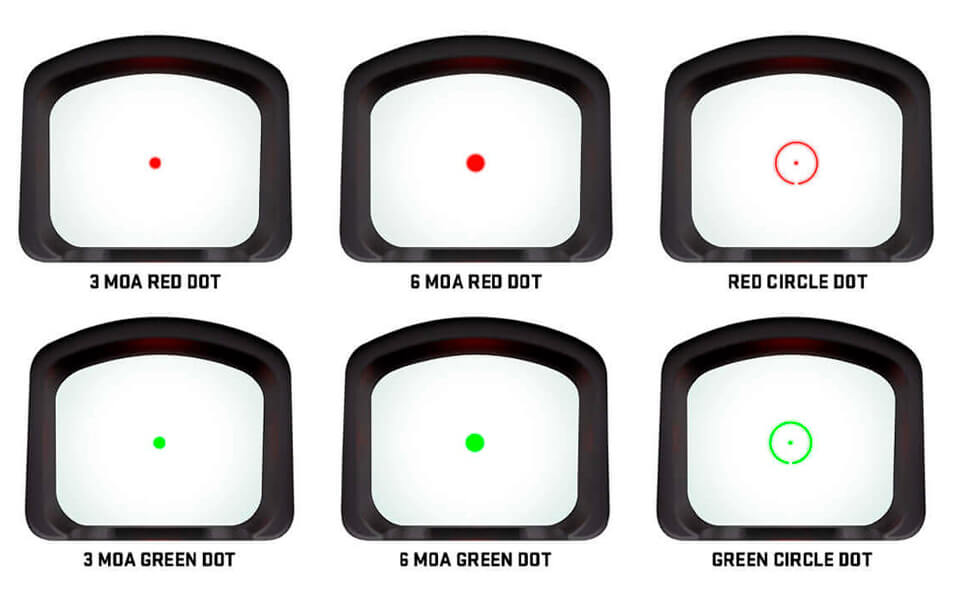
When selecting your SIG pistol optic sight, you will need to choose your preferred reticle from a list of options. The size of the dot reflected on the lens is measured in MOA (Minute of Angle).
- 3 MOA: Smaller and more precise. Excellent for bullseye target shooting and engagements beyond 25 yards.
- 6 MOA: Larger, brighter, and faster to pick up under recoil. Widely favored for concealed carry and fast-paced competition shooting.
- Circle/Dot: Utilizing a multi-reticle system that is selectable by the user, you can choose to run the optic with a very precise 2 MOA dot for accuracy at distance, a 32 MOA outer circle for fast acquisition at close range, or use the two reticles together simultaneously.
- Green Reticles: Offered in 3 MOA, 6 MOA or Circle/Dot options, green reticles can be easier for certain people to see, if red reticles appear blurry or distorted.

Top Picks by Category
The SIG SAUER Infinite Guarantee: Why It Matters for Your Red Dot
When you mount an optic to the slide of a handgun, you are subjecting it to extreme mechanical stress. With every shot, the sight endures massive G-forces as the slide violently reciprocates, slamming backward and forward in milliseconds. Because of this harsh operating environment, an optic's warranty is just as critical as its footprint, battery life, or reticle size.
This is where the SIG SAUER Infinite Guarantee sets a gold standard in the firearms industry, offering unprecedented peace of mind for pistol red dot shoppers.
Conclusion & Next Steps
Upgrading to a reflex sight is one of the most profound improvements you can make to your pistol platform. By understanding your specific use case—whether that is a rugged enclosed emitter for duty, a massive window for competition, or a dependable micro-optic for daily carry—you can select a sight that drastically improves your speed and accuracy.
Ready to find the perfect optic for your setup? Browse the entire line of SIG SAUER reflex sights at sigsauer.com.
Compare Products
Items